
Introduction
Previously on FBC….
Last week, we gave you the origin story. Facing a post-Cold War aerospace identity crisis, Dan Goldin arrived at NASA in 1992 and imposed a seemingly impossible mandate: fly more, spend less, move faster. The result was the Faster, Better, Cheaper doctrine: a management philosophy that cut spacecraft development time by 40%, slashed costs by two-thirds, and quadrupled mission cadence, while NASA’s top line sat unchanged for roughly a decade.
The seven rules of FBC:
- Start with physics.
- Go big only when the physics demand it.
- Require simplicity.
- Simulate before you build.
- Fail fast, fail cheap, and learn.
- Run a portfolio, not a flagship.
- Reduce programs to single, simple metrics.

Now we turn our focus to Part 2. How do we turn FBC loose on an America hungry to make things again? How do we scale? What does rebuilding supply chains mean? And how do we train people, and adopt technology, fast enough for it to actually matter?
Section 001
The Capacity Trap
FBC 2.0 starts from three premises:
1. You cannot scale what you do not have the capacity to build.
Capacity — floor space, industrial equipment, productive tooling, robotic machinery, trained hands, and tested processes — is the physical reality that enables production. Its absence is a hard limit on national ambition, no matter how much capital you raise or how many press releases you issue.
2. Capacity is downstream of supply chains, not startups or shiny things.
The most brilliant hardware design in the world is worth pennies on the dollar if you cannot reliably source and control the magnetics, semiconductors, the fasteners, the alloys, and the substrates that your product requires.
3. We are trapped in the Tip-of-Spear Fallacy.
Too much of our national energy goes to final-system integrators and too little to the tens of thousands of specialty long-tail providers: the machinists, PCB houses, precision extruders, etc. These are the firms that compose the actual supply chain, and this ratio has to change.
These three realities produce what we call the Capacity Trap: a circular failure mode where we can’t build at volume because we lack supply chains; we don’t fund capacity because we don’t have volume; and the supply chain never arrives because we never funded capacity.
Sounds convoluted, right? It is.
And it’s creating a tale of two industrial comebacks.
Section 002
A K-Shaped Industrial Comeback
We have a confession to make. Our community is suffering from Shiny-New-Thing Syndrome: We lionize the venture-backed startup’s $1B round, the frontier lab’s pretraining run, the mega-terra-giga Factory ribbon-cutting, and the press release that announces something long before any ground is cleared, equipment is installed, power is procured, or teams are assembled.
We – present company included – love the pointiest edge of the tip of the spear. Can you blame us? It’s exhilarating to work at the bleeding edge, to imagine the art of the possible with each new breakthrough.
But all of this rests on a base of technology platforms, processes, and people. It includes machining, fabrication, materials science companies, and a long tail of suppliers, integrators, and sub-assemblers who, somewhere along the way, turn raw materials into finished systems.
Our fixation on the tip at the expense of the base has produced a giant sucking sound: sovereign supply chains, processes, parts, and piece-parts being deprived of oxygen and pushed offshore to willing producers. The Shiny New Things get all the love: the capital, the press, protected markets, political allies, policy support, and brightest young minds. The base – our industrial substrate, the long tail of thousands of specialty job shops, Tier 2, 3, and 4 suppliers, and sub-assemblers that constitute equally important parts of a manufacturing economy – gets the scraps.
It should not be either-or. It needs to be both-and.
Where narratives accumulate, attention follows, then capital, then talent – until one day you wake up with an inverted pyramid, in which your base is starved precisely when it should be growing.
The founders and CEOs who see this most clearly respond in the only way that is rational for them – go full-bore vertical integration or die trying.
Section 003
The Vertical Integration Reflex
At the systems level, this Reflex breaks. If the only path to industrial success in America requires you to build your own supply chain from scratch, what happens to your suppliers? And their suppliers? And the rest of the value chain? If one ultra-vertically integrated giant survives and thrives in each sector, is that the best outcome for the country? Critical industries run by, with, and through three to four new champions, sitting atop an eroding base as supplements or supplicants to the current defense-industrial incumbents, are still brittle in ways we cannot afford.
Ian Brooke, the founder of Astro Mechanica, put it plainly last weekend, saying that “the reality of reindustrialization in the U.S. [is that it’s] play-acting. An indefinite optimism while hoping for some deus ex machina to save the day. I don’t think help is coming. The only way to succeed is being clear-eyed and taking it all on oneself.”
The honest picture of American manufacturing is a K-Shaped Industrial Comeback. The top arm is up and to the right, consisting of semi fabs, defense primes (and neoprimes), and the well-publicized big reshoring projects. But the bottom arm is arcing downward and continues to inflect month over month, as small-to-midsize suppliers age out or close up. Reshoring a final assembly line without rebuilding the supplier ecosystem and industrial cluster around it is like transplanting a tree without the root system. It will not take.
The Vertical Integration Reflex is a symptom of the Capacity Trap, not the cure. A cure would involve rebuilding the supplier base so that vertical integration becomes a strategic choice rather than a necessity for survival.
Section 004
A Modest Proposal: Building The America Industrial Complex
Our modest proposal rests on five pillars, each addressing a structural gap that the current national conversation is ignoring or hand-waving past.
- Full-Stack Factories
- FBC Clusters, Corridors, and Cities
- Supply Chain Sovereignty
- Government as Collaborator
- Pluralistic Capitalization
These five are not a priority list or a sequence. You cannot fix one and move onto the next. In the same way that the Capacity Trap is circular, these pillars demand systems thinking, a portfolio approach, and a whole-of-nation push. Systems fail when you pull one thread and leave the others slack.
Pillar 1: Full Stack Factories.
Most “digital transformation” in manufacturing is really just dashboards that read rather than write: they hold a mirror up to the factory, without changing what it does. Full-stack factories, as we envision them, close the gap between America’s extraordinary software toolkit and the long, long tail of under-digitized, low technology-adopting, and un/under-automated physical plants. The goal is not adoption of ‘Factory OS’-type offerings (twins, high-fidelity physics engines, simulation) for its own sake, but in service of progress metrics in the real world (cycle‑time compression, yield, scrap, uptime, MTBF, $/kg or $/unit coming down). The tools will vary by plant – robotics, adaptive tooling, simulation, reconfigurable layouts, embedded metrology – but the focus on your ‘main metrics’ shouldn’t stray. Technology can, and it must, move the numbers in the right direction.
Pillar 2: FBC Clusters, Corridors, and Cities.
The word “hub” has been strip-mined of meaning, so we’ll instead use Clusters, Corridors, and Cities. The point is that we need co-located manpower, manufacturing density, and healthy logistics arteries if we want any hope of going Faster, Better, Cheaper. Within these Clusters, Corridors, and Cities, five conditions must be simultaneously true:
- Tribal knowledge density: living expertise in complex physical systems
- Permitting velocity: fast and predictable when standards are met
- Power: cheap, reliable, and plentiful
- A logistics spine: rail, truck, port
- Willing communities: land, water, and local populations who say yes
You can see this – partially, precariously – in the LA basin today. The “Gundo” startup cluster today gets a lot of attention, and these teams are doing great work, but they still don’t have the surrounding substrate that once defined El Segundo and its neighboring towns Redondo Beach, Inglewood, and Hawthorne during an earlier era of The Aerospace Republic.
For every Cluster, Corridor, or City, an absolutely explicit requirement is a workforce who wants to ‘do the work,’ and a mechanism to uplevel those who ‘want to but don’t yet know how,’ so they can be equipped to meet the job spec. We see this as a ‘bootcamp’ model, with compressed reskilling programs modeled on military technical training pipelines. The single metric here would be: time to job-qualification.
Just a few examples of the many clusters available to a reinvigorated American manufacturing base at scale (more to come!):
Pillar 3: Supply Chain Sovereignty
Supply chain sovereignty ≠ autarky. We aren’t proposing to draw full and complete trade walls around the country. For us, supply chain sovereignty means multi-tier optionality, where no adversarial jurisdiction holds a chokepoint at any critical tier.
This requires working the full chain:
- Upstream (minerals, materials, precursors)
- Midstream (processing, refining, fabricating)
- Downstream (components, sub-assemblies, systems)
- Logistics (rail, trucks, waterways, ocean, air)
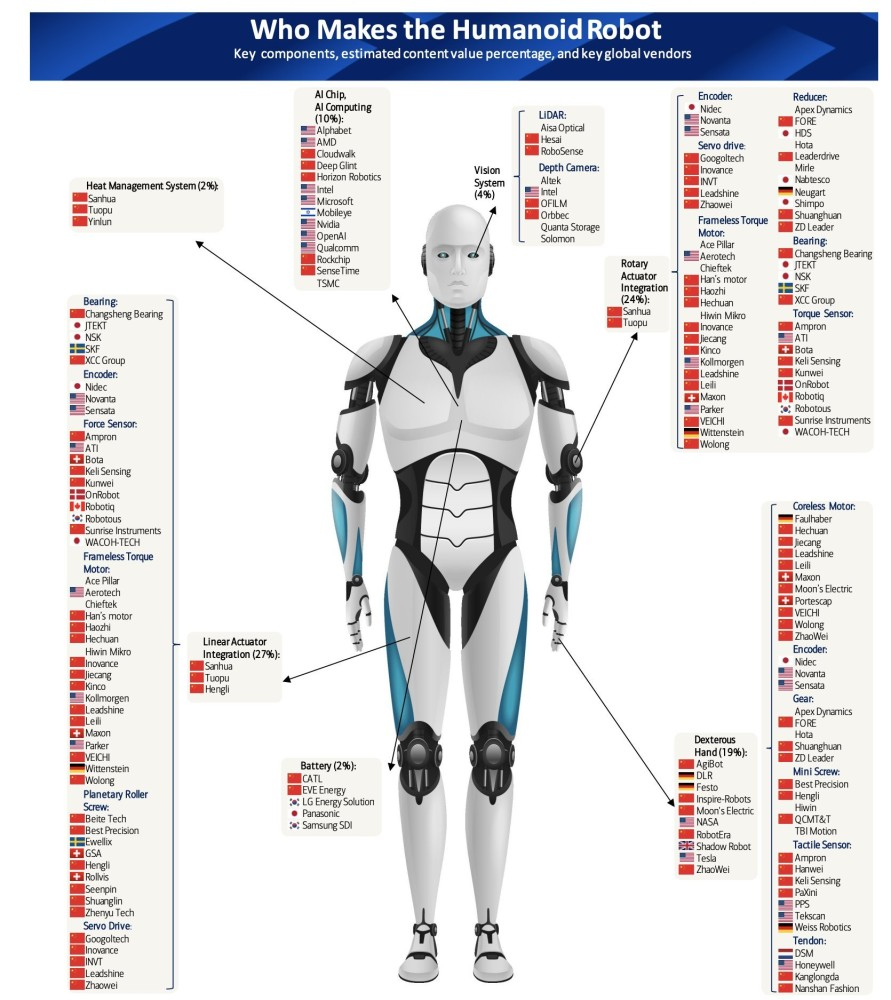
The north star: we should be able to map the supply chain for a robot, turbine, radar, or transformer, several tiers deep, and not discover that the only way to build it at scale is to rely on jurisdictions that don’t wish us well.
This could work in a world of few vertically integrated giants but then we’d have concentration risk and fewer shots on goal (which is antithetical to FBC dogma). We already have hundreds of specialty providers in the U.S. We need thousands more, grouped in close proximity. More like SoCal circa 1980’s or modern Shenzhen than our current model.
Pillar 4: Government as Collaborator
Two things can be true at once: 1) You can’t do this with private capital alone. 2) You can’t do it by lighting public money on fire.
And we’ll add another truth: the current way of doing business with Uncle Sam just won’t cut it. We can’t have starts and stops, years-long procurement, cost-plus programs rewarding delay, special conditions incompatible with production efficiency, and inconsistent regulation across federal, state, and local.
FBC 2.0 calls for the Government as Collaborator, not merely a backstop, benefactor, or bystander. Here’s what that looks like in practice:
- Predictable commitment, not boom-bust. Fund without interruption so companies can plan, hire, and scale suppliers. Tie programs to clear performance gates. Cancel for cause, not convenience. Use multi-year authorities so every change of administration doesn’t reshuffle the board.
- FBC-style permitting and siting. Treat permitting as an FBC problem: single, simple metrics (time to decision; pass/fail on clear standards), not an opaque, byzantine process. If a region has the ingredients – workforce, local support, logistics, power, water, land – make it faster and easier to build there. If it doesn’t, don’t dangle tax incentives and pretend otherwise.
- Use the existing toolbox with intent.
- Demand signals: Use the Pentagon and other anchor customers to create stable demand for new suppliers and components (along with final systems). Pair with time-limited tax credits targeted at new capacity in priority sectors, with sunset dates and performance conditions.
- De-risking: Point National Labs and Manufacturing USA at process, equipment, and materials challenges the private sector can then scale. Use CRADAs to pull emerging companies into Lab, DoW, DOE, and NASA work early in their lifecycle — not after years spent on the outside of cost-plus walls.
- Coordination: Align energy, industrial, trade, and permitting policy (DOE, Commerce, state and local) so the rules can pull in one direction. Use OSC, EXIM, America Makes, and existing regional programs as on-ramps for small and midsize firms.
The government has to show up as a repeatable, reliable counterparty with clear rules of engagement, not as a one-off grant program or a random swing of the subsidy pendulum.
Pillar 5: Capitalization Beyond Unicorns
The default venture path — raise successive rounds, grow to unicorn status if you’re lucky, then exit — can be a supply chain destruction machine. Acquisition by a giant usually means absorption, integration, and the quiet death of merchant suppliers and redundant capability. Every time a specialty manufacturer gets swallowed or goes under, the chain thins. Needless to say, the venture path isn’t right for every firm. Manufacturing is capex-heavy, working-capital-intensive, and fiercely competitive.
In the past, one of the many paths available to early liquidity for a growing, successful company was the IPO. Today that has largely been replaced by venture or PE pathways built around expectations of expanding valuations or an eventual sale. Industrial companies’ business models and returns often don’t fit either model. That’s okay.
FBC 2.0 calls for a pluralistic capital stack:
- Venture for real technology risk and early R&D bets
- Growth equity and PE for scaling proven products and rolling up sub-scale suppliers
- Debt and project finance for factory builds, equipment, and expansion
- Export and credit agencies (EXIM, OSC, and peers) for de-risking long-lead industrial projects.
- IPOs earlier in the lifecycle, giving specialty manufacturers access to public capital without requiring acquisition
We see encouraging signs, with historically industrial-averse institutions and allocators lining up and piling in. Still, we need to manage expectations. FBC insists that we normalize non-unicorn outcomes. A $150-250M specialty manufacturer employing a few hundred people, holding critical process know-how, and supplying multiple defense and commercial programs and customers is not a “lifestyle business.” It is a strategic national asset.
These pillars are the minimal set.
We need full-stack factories because you can’t run FBC on dashboards alone. We need clusters because you can’t iterate fast when your supply chain spans a continent or is severed by oceans. We need supply chain sovereignty because a single foreign chokepoint at Tier 3 can halt a production line. We need the government as collaborator because no private balance sheet will rebuild an industrial commons solo. And we need pluralistic capital because unicorn math cannot carry this load.
We already know what happens when we don’t get this right. We invent the transistor and lose electronics. We invent solar cells and give away the industry. We invent the internet and surrender the hardware layer. Today, especially with embodied AI, we run the risk of the same thing happening again…
FBC 2.0 is an attempt to break that pattern, before the K-Shaped Comeback hardens into a permanent split, and the bottom arm starts to drag the top one down with it. Before yet another American invention is built, owned, and operated somewhere else.
Section 005
Toward a Scoreboard
Faster, Better, Cheaper 1.0 worked because it compressed a philosophy into a tight set of rules and then measured whether teams actually followed them. The capstone was Rule 7: reduce programs to single, simple metrics. If you are not measuring it, you cannot say with certainty that you are actually doing it.
FBC 2.0 is an attempt to apply this same discipline to a national problem: rebuilding industrial capacity and the supplier base beneath it, while keeping learning velocity high and concentration risk low.
You cannot manage what you cannot measure. America does not yet have a national scoreboard for this and we intend to help address this shortcoming.
We do know two things:
- First, the numbers have to come from trusted official sources or they will be argued to death. If we want a national scoreboard for industrial capacity, we’re talking about Commerce, Treasury, Labor, DOE, and their peers. They have the data, the remit, and the ability to make it stick.
- Second, the scoreboard cannot be an index of the Press Release Economy. Announcements do not count. Incentives don’t count. Capital pledged does not count.
So we want to start a conversation. In the coming months, we’ll be working with operators, founders, chief executives, allocators, economists, and public servants to sketch out what a national FBC scoreboard would look like: what we should measure, where the data comes from, and how to keep it honest. We also commit today to convening the right group of folks under one roof to formalize this work, and come away with a functional, honest set of accountability metrics.
If you are building factories, running supply chains, allocating capital, or working in the agencies that touch any of this, we would love to hear from you. What do you measure? Where do you measure once and cut twice? What belongs on America’s FBC scoreboard? Where are we overestimating risk, under-indexing on friction, or missing obvious levers? Guest essays, critical letters, and concrete theories of the case – and counter-theories – are welcome.
The country needs to know where we stand. We intend to help fulfill this important need.