
LAS VEGAS — Your writer arrived in the desert with a dangerous conclusion already locked and loaded. His pre-baked conclusion – the lens through which he intended to view this entire chaotic sprawl – was that the “Consumer” in Consumer Electronics Show is a fiction. He had come here hopelessly convinced that the real story at CES is about techno-industrial capacity and the technical frontier.
If you scan the map of CES exhibition halls, you’ll see hundreds of thousands of square footage dedicated to the actual namesake of the show: consumer gadgetry, Bluetooth dongles, Wi-Fi routers, and such. Your writer is told there are people there. But he dared not go there. Time is the only currency that matters in this town, and he wasn’t going to spend his precious few hours in Sin City shuffling through carpeted caverns in search of a slightly better toaster or smarter bidet. He went straight to the West and North Halls to look for the red meat: “Physical AI.” It is the industry’s current shorthand for real-world, embodied AI: autonomous vehicles (AVs), humanoid robots, specialist bots, and any other examples you can find where software has grown hands, wheels, and engines.
What’s Got People Talking?
If you ignore the lanyards, and you tune out all the press releases touting “AI Agents” and “Digital Twins” and other sweet nothings, and you go look at the hardware, you can learn a lot. The show has effectively split into two parallel realities: the polished narrative on the stage, and the hardware realities on the floor (backed up by unit shipments, cycle times, and real-world deployments).
Here is a rushed attempt at pulling out the needles from the haystack.
The $4.5T elephant in the room: Nvidia unveiled Alpamayo, an open-source reasoning model for AVs and robotics arriving in Mercedes-Benz CLA models in Q1. This aspiring “Android of Physical AI” complements new simulation tools and Vera Rubin, the chipmaker’s next-generation workhorse for the AI supercycle. The sheer density of foot traffic to see Vera Rubin is a reminder that this show is not entirely for consumers, but for those building the machines that run the world.
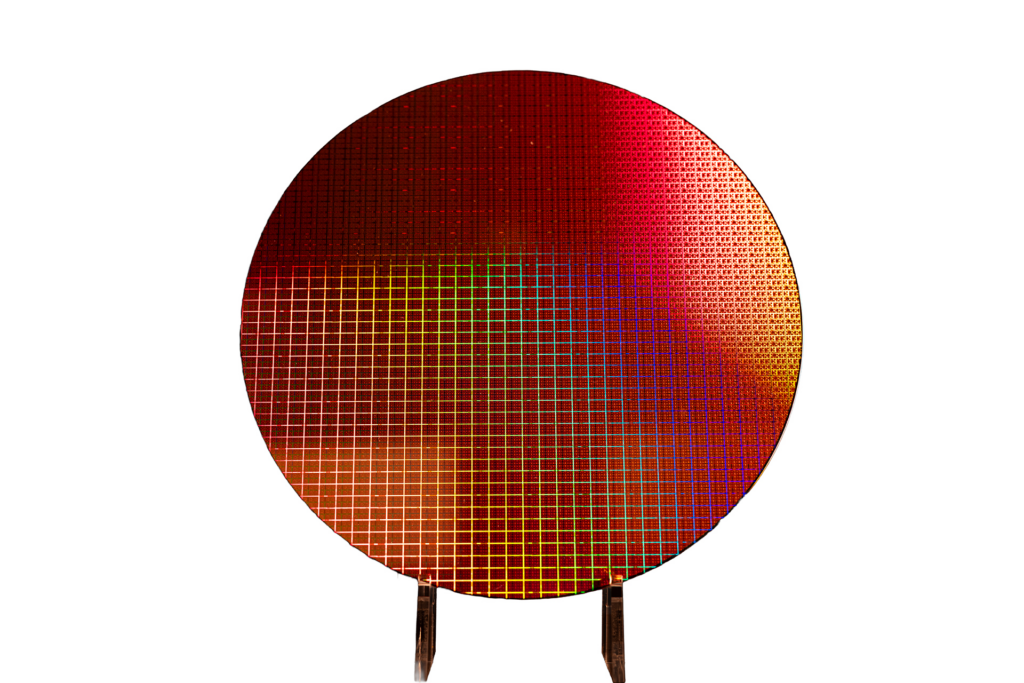
A make-or-break “Made in USA” moment: If Nvidia represents the design peak, Intel represents our last, best hope for returning to the bleeding edge of chipmaking. At CES, the company launched its first consumer platform built on Intel 18A, the most advanced node ever built in the U.S. After a decade of eating humble pie on process technology, Intel is back in the fight to be the foundry of the West.
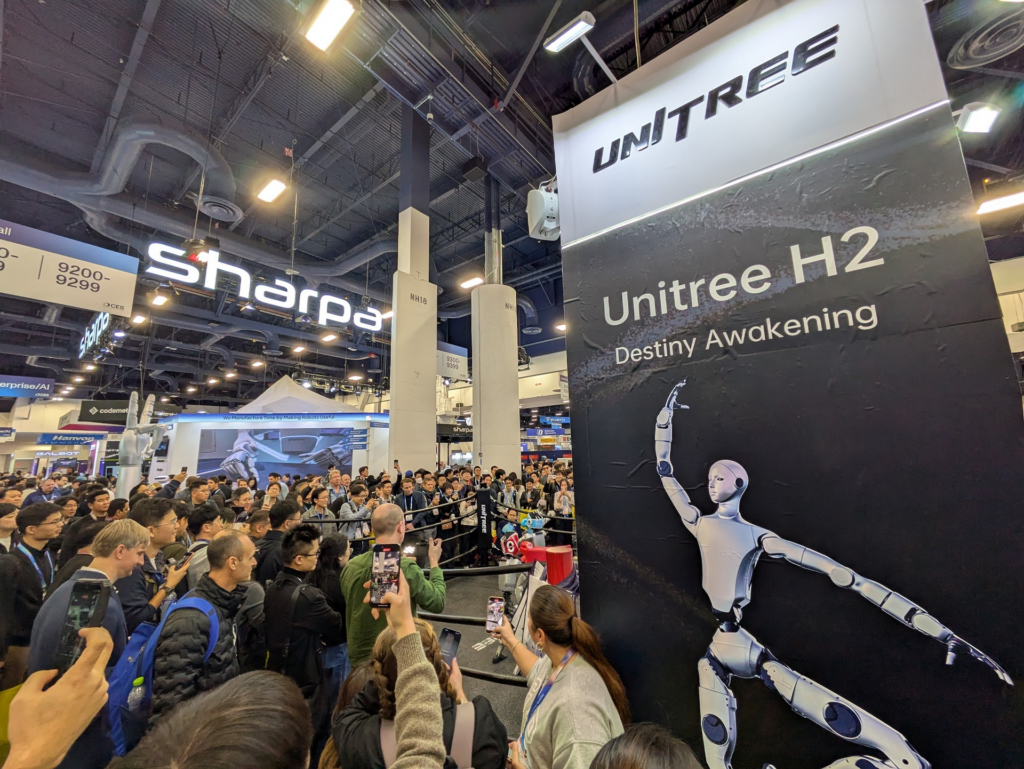
A Chinese volume victory hits you over the head: Within one hour of being at CES, your correspondent wrote his wife: we are getting smoked by the Chinese robotic manufacturers. 21 of the 38 humanoid exhibitors here are Chinese — a 55% market share that actually understates the reality. When you go up and talk to them, the leading firms will proudly report they are already shipping “multiple thousands” per year.
Are these hundreds of EV startups in the room with us? If you walked the West Hall expecting to see the “hundreds of Chinese EV startups” that headlines warned about in years past, you’d be confused. The herd has been culled. Only apex predators remain: the 10 Chinese OEMs that control ~95% of their domestic market. Of the survivors of the most brutal price war on Earth, a handful are in Vegas to find new territories (outside America) because there’s little left at home.
- Geely Auto Group, which controls Western interests like Volvo and Lotus, reminds us that it sold 3.02M vehicles in 2025 (100.8% of target). Their booth is a fortress, though the slogan above it—“Aiverything Aiverywhere”— is a reminder that great manufacturing does not necessarily equal great marketing.
- BYD looms as a ghost across the Convention Center. While they didn’t build a big booth this year, their 4.6M global sales figure (3x that of Tesla) is the invisible benchmark everyone else is measured against. What’s more, they have effectively become the “Intel Inside” of the electric transition, powering the ecosystem with batteries, components, and value-added services even when their name isn’t on the marquee.
The Vacuum-to-Hypercar Pipeline: The most jarring object in the North Hall wasn’t a robot, but a hypercar parked at the Dreame booth. You probably don’t know Dreame. And if you do, you know them as a Roomba competitor (RIP). Yet here they are, debuting a supercar with 1,876 horsepower that hits 60 mph in 1.8 seconds. It is the ultimate flex of supply chain liquidity: if you can mass-produce electric motors for floor scrubbers, maybe you can scale them up to beat a Bugatti.
Human-out Heavy Metal: Robotaxis are drawing crowds this year, with Alphabet’s Waymo and Amazon’s Zoox both with prominent presences, but if we’re being honest, autonomy has been a big theme at this show for half a decade. This year, these exhibitors finally don’t have to tout the “only a few years away” line – as robotaxis have become ubiquitous in select metros. But, since they have less of a “shiny thing” allure to them, naturally, a lot of focus has turned to off-road autonomy. Your writer has a soft spot for John Deere – as he is partnered with them at Array Labs – but bias aside, they have a bigger presence than Zoox or Waymo. Joining them in the dirt‑track dojo, Caterpillar, Oshkosh, and Doosan Bobcat all commanded large audiences as they touted efforts to automate big chunks of their product lineups.
Energy infrastructure in the limelight (!?): Korea Electric Power, a state-run utility, is operating a booth on the CES main floor – you sure don’t see that every year! This year, we’ve seen major announcements ranging from SMRs to fusion systems to solid-state batteries targeting humanoids and AI datacenters (two applications where power density determines viability). It’s refreshing to see an underappreciated sector like energy enjoy the spotlight, even if just for a fleeting moment and due to demands from trendier technological themes (AI, AI, and AI).
The Autonomous Afterhours
Day 1 concludes at the end of the strip at the annual Autonocast party, co-hosted by the indefatigable Alex Roy, a friend of Per Aspera, VC, mobility kingmaker, and the industry’s de facto master of ceremonies. The party is held under the cover of Chatham House rules, so all we’ll say is that it was a club full of CEOs from Silicon Valley, Detroit, Stuttgart, Japan, and beyond, along with very large capital allocators, underscoring that autonomy has become a here and now story.
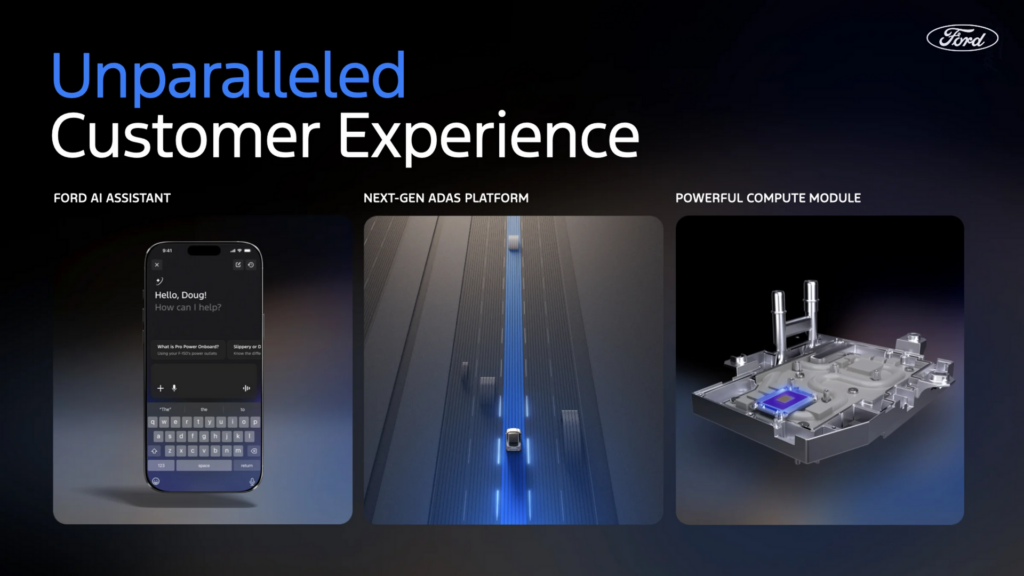
Among these survivors of the trough of disillusionment, the zeitgeist has shifted from evangelism to exhausted competence, from will it work? to how do we roll it out? and the brutal mechanics of scale, capital efficiency, and market structure. These days, you’ll hear a lot of spirited “end-to-end” debate among this set. (Speaking of end-to-end, the only official presence of Elon Musk’s empire at CES is The Boring Company’s Hyperloop outside the Convention Center.) But Wayve is here in a big way, showing its “generalizable” self-driving system on Vegas streets for the first time. And while Ford wasn’t exhibiting, as it retreats from EVs, the carmaker did announce on stage yesterday that it aims to bring accessible, affordable “eyes-off” driving to customers by 2028.
Across the checkerboard, you’ll see hardening alliances, such as the Lucid/Nuro/Uber partnership, which unveiled their robotaxi Tuesday in Vegas. The dating phase is over, with marriages (and divorces) being finalized. Nvidia is advancing on the space, as Tesla presses forward with FSD and Robotaxi.
All the while, if you return to the showroom floor, it feels as if the center of automotive gravity is shifting east, with the Asian ecosystem, specifically Chinese OEMs, demonstrating remarkable forward progress. There are dozens and dozens of booths from Chinese companies touting autonomous forklifts, courtyard robots, cleaning robots, AGVs/AMRs, domestic service robots, service robots, sidewalk delivery bots, regular delivery robots, quadruped robots, humanoid robots, and robotrucks. All this is to say, autonomy rollouts are also happening in full force in China. In fact, one of our trusted AV whisperers has predicted that, despite the U.S. holding the architectural crown, the PRC will finish 2026 with more commercial robotaxis in service than the United States.
The (Metaphorical) Hangover
Going to a desert casino and trade show with 130,000 other people is a very “2019” way to behave – at least by the standards of the Bay Area, where culture has curdled into ‘going direct,’ teetotaling tendencies, 8:00 PM bedtimes, performative optimization practices, and monasteries to AGI. Very Online CES attendees probably can’t help but walk the floors with TBPN’s critique ringing in their ears – that tech conferences are dead and feel somewhat boomer. Maybe so, and the “consumer” moniker no longer fully fits. But across both foundational and frontier technologies, now more than ever, it feels like the Game On The Field.
In years past, the show has felt like a perpetual Draft Combine, with AVs just a few years away, humanoid robots running tightly preprogrammed, carefully rehearsed demo loops, concept cars galore, and more. There’s still plenty of that, but now, reality has a stronger gravitational pull and it feels like Regular Season. Boston Dynamics has a production-ready Atlas; autonomous systems are proliferating across the world; and a South Korean conglomerate is building SMRs by the dozen. And most importantly, you can see two technology ecosystems head-to-head in a way that you can’t anywhere else or at any other time.
In Sin City, it occurs to your writer that Dan Wang (author of Breakneck) was right. In his recent 2025 Letter, he wrote that Silicon Valley and the Communist Party are the only two forces on earth “equally serious, self-serious, and indeed, completely humorless.” Standing here, watching dozens of Chinese humanoid companies, you can feel the remorseless intensity radiating off both sides.
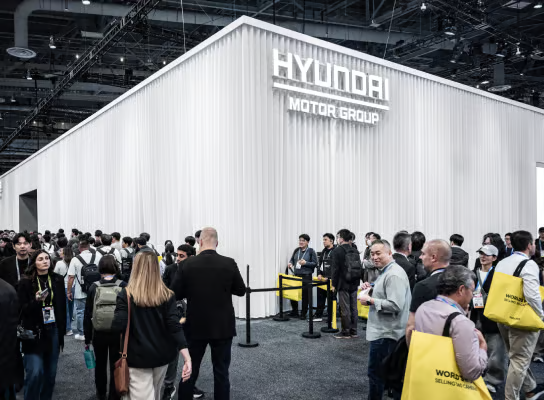
What Per Aspera sees in Vegas is the “Rising Sea” versus the “Chisel Strike” (loosely paraphrasing Wang). Hyundai, whose Boston Dynamics yesterday unveiled the new Atlas, has built a magnificent instrument: 56 degrees of freedom, fully electric, capable of swapping its own batteries, and designed to crack the nut of industrial labor with a single, perfect blow. But the timeline betrays the strategy: targeting an annual capacity of 30,000 units…by 2028. It is the dream of the perfect product, arriving two years too late. A triumph of engineering, but a failure of velocity. While Western firms perfect the “Chisel Strike” — building the perfectly choreographed, backflipping marvel — Shenzhen is simply dissolving the problem with speed and volume (or, at least, trying to). And the Chinese humanoids, as your writer saw with his own two eyes, can also do backflips now.
In the end, CES is a fun if exhausting event. The hangover that hits you on the flight home isn’t from booze (for at least some of us). It’s from realizing that we — the West — have spent the last couple of decades overbuilding the perfect brain (software), while forgetting that it’s equally important to also invest in the body (hardware, energy, industrial capacity, etc.). This is a large part of why we founded Per Aspera — to focus on progress in the real world. It’s high time we focus on both the brain and the body, and CES 2026 leaves us cautiously optimistic we’re making progress on this front.
See you next year!