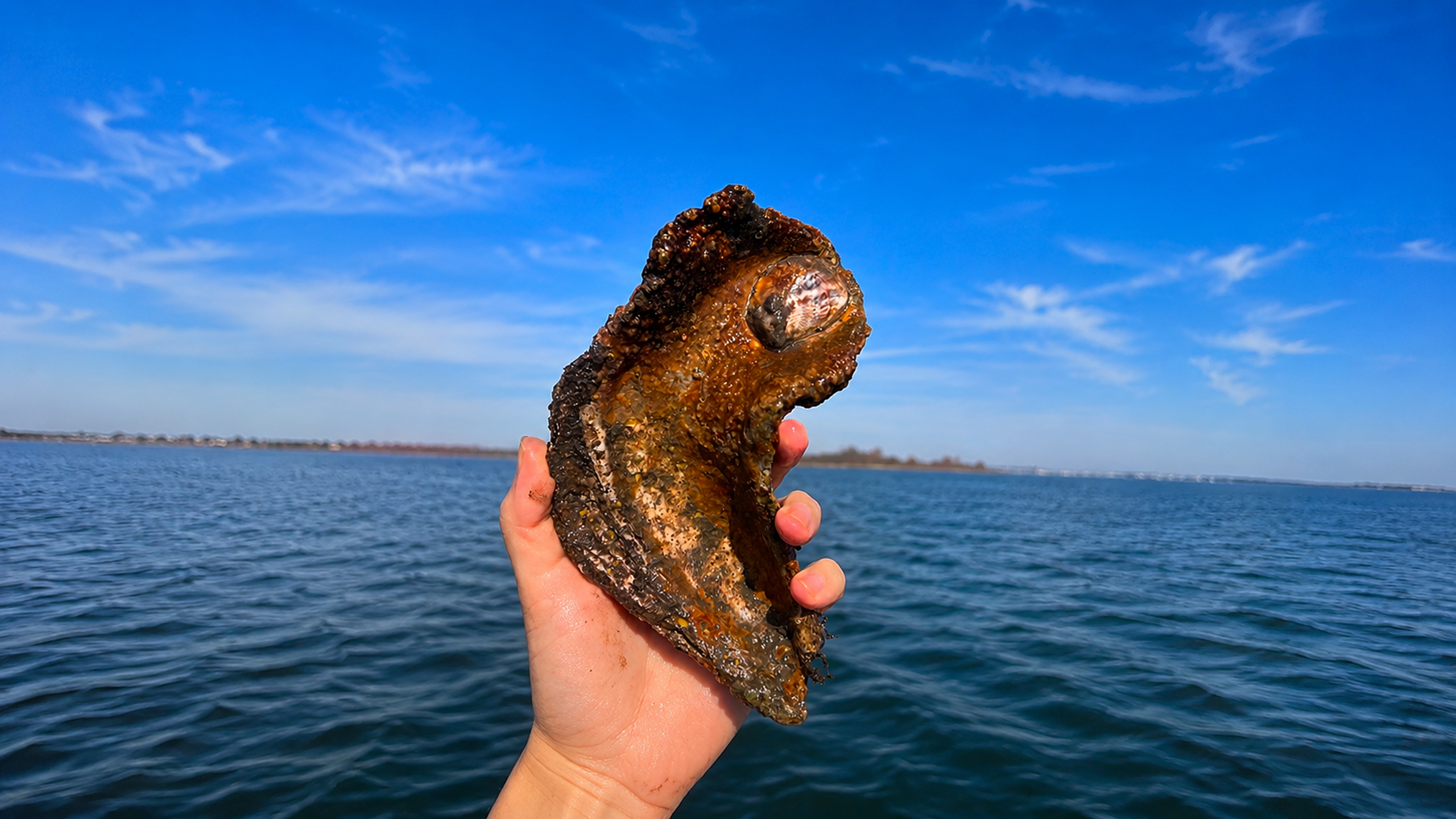
My Sister Ellen Ellie
I’m really proud of my sister Ellen! (or “Ellie”, as the family calls her.) A fellow warrior for science and a public school educator in the New York City system for 31 years. She’s retired now, but as those who’ve sat through my unsolicited lectures know… a Goldin never really retires from teaching 😉.
When Ellie and I were little, our father would stick us in the back seat of his car and drive us out to City Island, a small sliver off the coast of the Bronx.

He’d rent a rowboat from a boatyard that no longer exists, and we’d go fishing. The island was such a small, local place — a New England style sailing village in the middle of NYC — and we’ve had a love affair with it ever since.

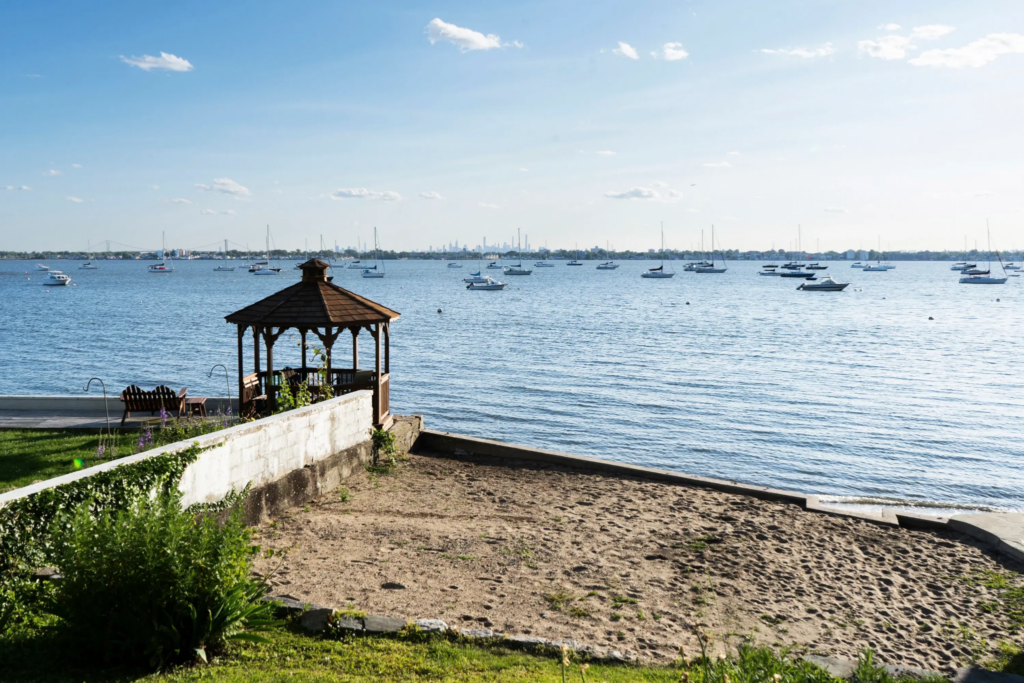
My pursuit of space took me out west to Cleveland and LA. Ellie ultimately moved east of the main Bronx landmass to City Island and became what the islanders call a “musselsucker” — the local term for a transplant, as opposed to a “clam digger,” who has to have been born there.
For the past seven years — and the reason I’m writing this story — Ellie, at 80-something, has been the official (*award-winning*) photographer of the City Island Oyster Reef, a local group started by two scientists who learned that live oysters can naturally filter dirty harbor waters. They pitched the idea to their City Island neighbors back in 2019, and in the seven short years since, the group has gone from that initial pitch to:
- hundreds of neighbors monitoring and clearing the waters of City Island;
- education programs and partnerships with Bronx elementary schools all the way up to PhD teams at Cornell, Hunter College, and SUNY Maritime
- and, recently, to an international delegation from South Korea who flew to City Island to study what CIOR has built. A testament to what American neighbors can build together (soft power, as a real neighborhood startup!).
The word “community” comes from the Latin communitas —
com- / con- = “together / with”
munis / munia / mūnus = “duties, services, what you do or give for others”
A community is quite literally a group of people who share their duties and gifts with one another. And America, as simply a summation of our local communities, is going to lose what we have unless we learn from them.
That’s why, when Ellie sent me the CIOR Annual Report, I asked to speak with Sally Connolly (Chair), Eliana Abrams (Director of Programs & Design) and Ellie together — so I could share with you all the work they’re doing, as a community in the purest sense of the word. They are people sharing their duties and gifts with one another, in pursuit of something hard, physical, and long-horizon: the regeneration of New York City’s waters. And they’re proof that — through the collective pursuit of the hard things — disintegration is not our destiny.

Undoing 200 Years of Destruction
Anyway! I would not be me if I did not start with the science and biology of how “this all works.”
Pre-Colonial Baseline
Long before my and Ellie’s time in the 1940s and 50s, the waters around New York City were dense with oysters — so dense that when English explorer Henry Hudson, on his third attempt to find a shortcut from Europe to Asia, sailed into New York Bay in 1609, he sailed over what some ecologists believe was 220,000 acres of oyster reefs — half the world’s oysters at the time. This is more surface area than all five boroughs of New York City combined.
More importantly: if you can imagine it, the waters of New York City were… clean 😱. A single adult oyster can filter up to 50 gallons of water per day (this is a bathtub’s worth, I’m told). As it feeds, it pumps water across its gills, which are lined with tiny hair-like cilia coated in mucus. The mucus traps whatever is suspended in the water — algae, sediment, nitrogen compounds, pathogens — and the oyster either eats and digests what it can or expels the rest as pellets that sink to the seafloor. The city once had the benefit of earth’s natural Brita filter!

When you spread a single oyster’s filtering capability across 220,000 acres of reef (for reference: Starbase, Texas is ~1,100 acres), that dense, historical oyster population could filter over the entire volume of the Hudson–Raritan estuary in a matter of days – not weeks, months, or years!
It’s said that early European explorers described New York Harbor’s waters as remarkably clear, being able to lean over to the sides of their boats and seeing the bottom of the estuary floors.
Then came the 1800s.
200 Years of Destruction
Oyster harvesting took New York from abundance → exhaustion. By the 1880s, the natural oyster beds that ringed Manhattan were largely stripped. As oyster prices fell and technology improved — from hand tongs to steam‑powered dredges, from local street stalls to a national market reached by rail — oystermen were pushed into a pure volume game, taking more oysters from shrinking reefs just to stay afloat. Within a few generations, that relentless overharvesting had turned one of the world’s great oyster grounds into a depleted fishery.

As the oysters were being worked down, the city was also turning the harbor into a sewer. Throughout the 19th century, New York’s population rapidly climbed from hundreds of thousands to more than three million. Most household and industrial waste was discharged directly into the Hudson, East River, and nearby bays through an expanding network of outfalls. That waste obviously carried pathogens (hello cholera, hello typhoid) and organic matter (food scraps/feces/dead tissue…), and shrinking oyster reefs meant far less filtration of algae and suspended particles. By 1929, in the Regional Plan of New York and Its Environs, the city was described as “a body of land entirely surrounded by sewage.”


Today, ~200 years later, some of that damage has been undone. The 1972 Clean Water Act made it illegal to discharge untreated sewage into navigable waters without a permit, and the wave of wastewater‑treatment plants built since has genuinely improved the baseline. But about 60% of New York City still runs on a 19th‑century‑era combined sewer system — one set of pipes carrying both household sewage and street rainwater. On a dry day, that combined flow goes to a treatment plant; when heavy rain overwhelms the system, the mixture is released directly into nearby rivers and bays without treatment, producing an estimated scale of billions of gallons of combined sewer overflows annually.
Back to City Island Oyster Reef
All of this leads back to the small community at the center of the story. City Island Oyster Reef’s goal is to put back living oyster reefs to filter this water surrounding their beloved island. The steps:
- Pick the right spot — survey the seafloor, measure the salinity, check what’s already living down there.
- Build dense reefs — roughly 50 concrete reef balls, each one already covered in baby oysters (the technical term is “spat,” and yes, it’s adorable) plus thousands of pounds of oyster shells, also seeded with spat.
- Measure the changes — water quality, sediment, fish, oyster survival, the works!


Technical Design Considerations
Density is the game. One oyster filtering a bathtub’s worth of water is somewhat of a party trick. But at ecosystem scale, it’s a rounding error. Now cluster thousands of those same oysters onto a single reef structure: reef balls, spat-on-shell, oysters stacked shoulder-to-shoulder, every square foot of seafloor running hundreds of biological pumps in parallel. That’s a filtration system. As we know from the technical world, real, powerful function emerges when you move from a few isolated units to a dense, organized array of them at scale. For oyster filtration: ~50 live oysters per square meter is considered the floor for ecological function.
Everything is geometry. A flat seafloor lets water slide past in relatively smooth, horizontal layers, barely interacting with what lies below. A dense, three‑dimensional oyster reef breaks that pattern in three related ways at once:
- Surface area: a one‑meter‑tall reef can have several times more exposed biological surface than the same footprint of flat oyster habitat, because every shell, nook, and crevice adds new filtering geometry.
- Flow recruitment: the coastal‑engineers have a phrase, “roughening the bottom” — where the reef’s irregular height and texture trips up the boundary layer, generating turbulence that pulls water into the reef rather than letting it skim over.
- Internal porosity: the spaces between shells and reef elements are wide enough to admit flow but narrow enough to slow it, so interior oysters can feed on water that remains rich in particles even after the surface oysters have filtered some of the same flow.

A good reef is a self-propagating reef. A reef isn’t a finished structure when constructed — it’s a structure that keeps growing over time. Larvae from local oyster populations, including the reef itself, settle on the existing structure, metamorphose into spat, attach, grow, and over their lifetimes lay down new layers of calcium-carbonate shell. When they eventually die, their shells remain in place and become substrate for the next generation of settlers. Year after year, in good conditions, the reef accretes — typically 2 to 10 millimeters of vertical relief per year, decade by decade, century by century.
This is why every CIOR design choice is also a century-long one, involving:
- substrate chemistry that produces the biofilms larvae prefer
- surface complexity that gives newly-settled spat shelter from predators in their first vulnerable months
- vertical clearance to outpace sediment burial
- ** the conditions for self-propagation need to be designed and constructed in
♥️ Design matters!
Two Centuries vs. Decades
Now, it wouldn’t be Per Aspera if we weren’t clear-eyed and honest about the realities of such an operation. We’re talking about undoing two centuries of damage to New York’s waters. That ain’t going to happen overnight!
Seven years in, CIOR has built the scientific foundation for the big reef construction to come:
| Thousands of oysters in monitoring cages across four sites in the waters around City Island | With survival rates of 50 to 75% across those sites in 2025, concrete evidence that oysters can grow in modern New York waters. This had to be established before any reef could be designed. |
| ~5 years of biweekly sunrise water-quality monitoring | Plus a continuous logger deployed in 2025 that now reads dissolved oxygen, temperature, and salinity every 15 minutes year-round. |
| Dive surveys and sediment sampling across five candidate reef sites | The structured data that determined which sites were structurally suitable for reef placement, narrowed from five to two finalists in 2023. |
| A first full season of fish monitoring at the two sites in 2025 | 62 species, 4,700+ organisms catalogued, establishing the ecological baseline against which the reef’s eventual impact will be measured. |
As I always say: “test, test, test” and “measure twice, cut once.”
From this groundwork, with federal funding from the National Fish and Wildlife Foundation in hand, CIOR’s first reef goes in at Delmour’s Point on the west side of City Island in 2027 – based on the area’s:
| Harder seafloor | soft sediment swallows reef balls; Delmour’s bottom holds them |
| Lower slope | keeps structures from sliding |
| Salinity around 17.5 | the optimum for oysters in Long Island Sound (acceptable range 10–27.5) |
| Dissolved oxygen, pH (6.75–8.75), and temperature (20°–32.5°C) | all within the livable bands oysters need |
| Documented oyster growth | plus survival, and recruitment in the cages CIOR has had in the water there for years |
(8 years is my magic number for accomplishing meaningful tasks. My mentor Dr.Simon Ramo in coordination with General Bernard Schriever” had the first Minuteman ICBM squadron operational from program authorization in roughly 1/2 that time. The International Space Stationwent from program approval to permanent crew occupation in 7. We landed on the moon ~7 years after JFK promised our presence. CIOR is getting its first reef installed in magic year number 8!)


Now, one community reef like the City Island Oyster Reef will not undo 21 billion gallons / year of sewer overflows. Achieving measurable change at the estuary scale will likely require dozens of reefs — each spanning several acres and strategically distributed across urbanized shorelines. Even if we try to attribute localized improvement directly to CIOR’s own reef — saying with scientific confidence that “the City Island Oyster Reef caused measurable reduction in nitrogen or turbidity at Site X” — we would still need 3 to 6 years of post‑construction monitoring after the 2027 build, with robust baseline data and colocated controls, before the evidence is strong enough to support that kind of causal claim.
So, what makes this effort remarkable is that they are willing to work on that timescale anyway:
- older volunteers starting a reef they will never see at full strength
- younger scientists inheriting long time‑series of data
- and a generation of kids who may not get clear‑water swims off City Island until they are taking their own children down to the shoreline.
How remarkable, to be part of such an intergenerational effort, despite its long horizon timescale!
A Truly Self-Reliant Community
The default American nonprofit model in the modern day is to hire consultants, contract out the science, outsource monitoring, and then write grants to keep that whole machine funded. The expertise resides outside the organization, whose primary job is to be an administrator and coordinate others doing the real work.
The CIOR Board, led by Chairperson Sally Connolly, is – as Sally describes it – a complete project team drawn from a single neighborhood:
- Sally Connolly, Chair,who was Deputy Director of Community Affairs for Manhattan’s District Attorney
- Mike Carew, Vice Chair, a diver who is a ten-year veteran of the NYPD’s Scuba team
- Barbara Dolensek, Secretary, who was executive editor at the Metropolitan Museum of Art and is VP of the City Island Historical Society
- Barbara Zahm, Treasurer, who comes from the world of federal-level science product development and grants
- Hailey Clancy, a scientist and a retired U.S. Army officer
- Ann (Adjie) Henderson, also a scientist with more than 200 biology-related papers under her belt
- Maria Caruso, a community organizer who specializes in luxury ecotourism travel
- Linda Baldwin, the person who ensures access to the waterfront, an attorney and former city planner
The loop also closes on City Island. Six City Island seafood places — Sammy’s Fish Box, Sammy’s Smokehouse, Tony’s Pier, Johnny’s Reef, Sea Shore, and Seafood City — set their emptied oyster shells aside, where CIOR’s Director of Maritime Field Operations, Frank Williams, and his team collect them from spring through fall and transport them to a curing station at the former Pelham Bay Park Landfill, just across the bridge on the mainland. There, the shells sit in the open for months — sun and time strip off organics and disinfect them. Once cured, the shells go to Cornell Cooperative Extension’s marine program on Long Island, where oyster larvae are set onto them to grow into “spat-on-shell” — living building blocks for new reefs.
From Cornell, the spat-on-shell flows out to oyster-restoration projects across Long Island Sound — most of it, year after year, going to support work being built right now elsewhere in the watershed. For the Delmour’s Point reef in 2027, Cornell will produce a dedicated batch: thousands of pounds of spat-on-shell raised specifically for the new reef, alongside roughly 50 reef balls each pre-seeded with baby oysters.
There's no subcontracting. City Islanders — if we have to make a boat, we make a boat. We go to our own carpenters. If we have to do something on the water, we go to our marine experts. If we have to write something, we go to our historians. We do everything totally by ourselves.”
– Sally Connolly, City Island Oyster Reef Chair
There is a culture of self-reliance baked into this island’s history. City Island was part of Pelham, NY until 1895 — a small working village at the end of the line, where wealthy Pelham residents kept summer homes and where the local economy ran on oysters. The oyster business itself was largely the invention of an islander named Orrin Fordham, who developed a system of expanding the natural reefs by tossing oyster shells back over them — a strikingly direct ancestor of the work CIOR does today. When disease and scarcity ended the oyster industry, the island’s craftspeople pivoted to boat-building and sailmaking. For nearly a century, City Island yards designed and built commercial vessels as well as world-class racing yachts. Between 1935 and 1980, twenty 12-meter sailing yachts were built in the United States; twelve of them on City Island, and five went on to defend the America’s Cup successfully seven times. (The boat yards closed in the 1980s; the last sailmaker on the island shut down two years ago.) Some of CIOR’s technical inputs are now produced offsite (the manufactured concrete reef balls, the spat-on-shell from Cornell’s hatchery). But the cultural pattern is unchanged: a small, tightly-knit community organizing itself around hard, technical work.
My point is: community-building and community-leading does not happen by chance. It’s a skill, and it requires intentional effort. It’s the deliberate work of seeing what gifts and services each person can contribute and weaving those individual gifts into a single, functioning whole.
As Sally says:
They’re there! You just have to look. But they’re there.

In an Age of Profit…
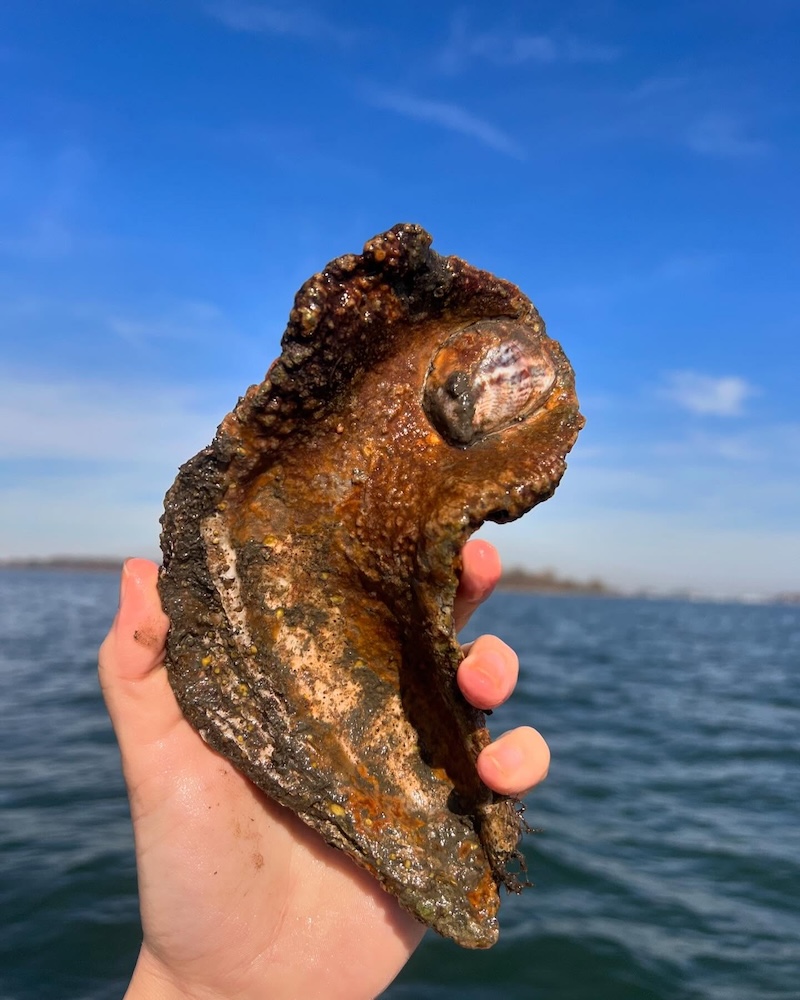
City Island Oyster Reef runs on primarily volunteer work, paid interns, and shared time. Most of the work is done by neighbors who get up before dawn to collect water samples, haul shells, and count fish, heading out at 5:30 a.m. — which was initially done by kayak — to circle four miles around the island and hit monitoring stations within three hours of sunrise. My sister Ellie folds her photography into that work, documenting the water‑quality runs and reef prep as part of the monitoring record.

When CIOR needed $6,000 for a liftgate on its shell truck, Sally put out a call; the community sent $10,000 instead.
“They’re not just giving money,” she told us. “They are part of it.”

The reef has also become one of the few things that crosses New York’s political, cultural, and societal lines. The project works because everyone can see the same water and align on a shared outcome. Who doesn’t want a cleaner, more alive shoreline?!?
In seven years, this small, local effort has pulled in partners from far beyond the island — from Boy Scouts hauling shell to Cornell postdocs studying oyster microbiomes, from twelve Bronx schools to environmental organizations across the country.
My sister Ellie has found herself trekking back to our home borough of Da Bronx where people drink couffeeee (as I call it), helping children dissect oysters, peer through microscopes, and meet the shoreline as a living lab rather than an off‑limits city edge.

Conclusion
I, like many of you, want the American community to feel like, well, a community again. I’m told that in 1990, roughly 3% of Americans reported having zero close friends. By 2024, that number had risen to around 17% — nearly a sixfold increase in a single generation. And I personally see it everywhere: people, young and old, heads down in their phones, living on separate feeds, camped on opposite sides of a political war.
We shouldn’t be bowling alone!
I’m so proud of my sister Ellie and her neighbors on City Island — they are people doing the hard work of holding the American community up, while hundreds of millions of us have let it drift. Their work is demanding, physical, and literally intergenerational. But they are pursuing it together anyway.
We are a country that is nothing more than the summation of our local communities. And America can learn from the oyster-reef community that lives on City Island.
Ad astra, per aspera.


Toolkit: Advice from CIOR Leads
Many of you, like Ellie, Sally and Eliana, are invested citizens of your own hood — already wondering how to pull your own neighbors together around something important. Maybe that’s a CIOR-similar effort in the “oyster space” (a new category for our scientific-technological taxonomy!); maybe it’s a different big-impact scientific project entirely.
Anyone who’s started a nonprofit, especially one without a mega-donor footing the bill, knows that inception, growth, and day-to-day grind are grueling — and even more so when results take decades to measure. CIOR’s trajectory, by that standard, is remarkable. So with Sally Connolly (Chairperson) and Eliana Abrams (Director of Programs & Design) on the line, we captured their hard-won lessons for building a generational, impactful local organization:
- Balance the science and the community. If you skew too far toward the science, the community disappears and you are running a project for PhDs. If you skew too far toward the community, you lose the rigor and nobody takes your data seriously. The answer is to make the science the community activity. Train regular people to do the actual monitoring, the actual measuring, the actual fieldwork. Every volunteer interaction should become a data collection event.
- Work with the regulators and government agencies, not against them. Seven years in, CIOR’s permit for its first oyster reef — issued by the New York State Department of Environmental Conservation, with the federal Army Corps of Engineers sign-off embedded inside it — is still in its final stretch.
But as Sally puts it: “You’ve got to look at it from their shoes. They’re doing their jobs.” - That said, the strategy is to find short-term wins while you fight for the long-term goal. Real, production-level filtration data won’t come in until the Delmour’s Point reef goes in (2027) and is monitored for another 3-6 years after that. So: a decade-plus, total, before anyone can say “the harbor is cleaner because of us.” In the meantime, CIOR has:
- Reclaimed a knotweed-choked NYC Parks lot as the “Living Shoreline” outdoor classroom.
- Put oysters in the water across four cage sites.
- Documented the ecology responding to the oyster cages.
- Completed the pre-construction fish census at Delmour’s Point.
- Stood up a shell-recycling pipeline.
- All of this does not point to: “the harbor is cleaner because of us,” but they’re incremental wins in the process of becoming “production-ready”.
- Look around before you look outside (a good skill for us building in this era to learn). Your carpenters, your scientists, your teachers, your divers — they’re already in your community. CIOR’s strength, according to their leads, is their ability to embrace the diversity of their community. “When you’re working with a diverse group, there is no bad idea; you listen to everyone. And you work with people to figure out where they fit into the organization.”